

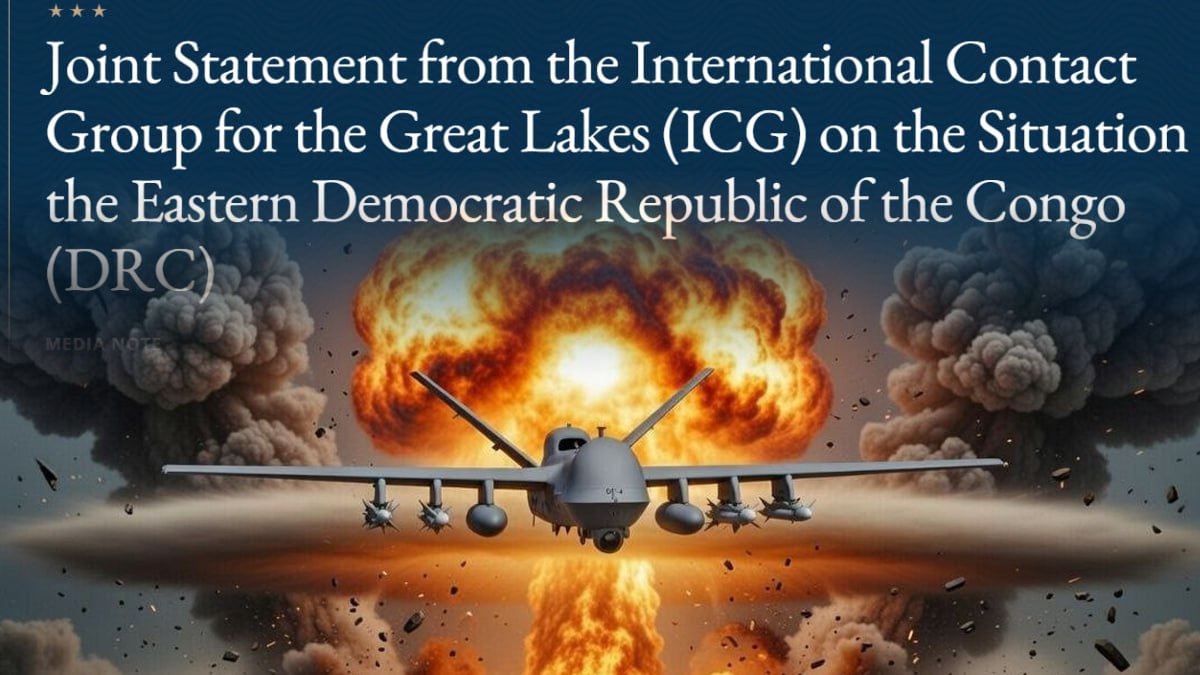
The latest statement from a group of Western countries that fancy themselves as ‘the International Contact Group for the Great Lakes’ (ICG) on the crisis in Eastern DRC contains all the right words. It claims to call for peace, condemns violence, and urges dialogue.
But words are cheap, and the ICG’s credibility is on the line. Notably, the statement suffers from two fatal flaws that render it useless: a complete lack of an enforcement mechanism and an incriminatingly poor sense of timing.
First, and most damningly, the statement lacks teeth.
Yes, it points at Kinshasa as a primary violator of shaky ceasefire agreements. But, where are the sanctions against the Tshisekedi regime? Where are the consequences for a regime whose officials also engage in genocidal incitement with impunity?
Some of the members of this very group were quick to intervene militarily in Libya based on accusations of hate speech. Yet, when Congolese army spokesperson Gen. Maj. Sylvain Ekenge appears on national television to demean and threaten the Tutsi community in a country where hate speech is a state-sanctioned ideology, the response is a deafening silence .
Similarily, the ICG watches as drone attacks target civilian zones in Masisi and Minembwe, blaming Kinshasa in text while refusing to act against it in practice .
If the ICG wants to be seen as a serious actor, then Kinshasa’s ceasefire violations and incitement to genocide must carry a steep price. A statement without sanctions is merely a suggestion, and suggestions are ignored by those who believe to have western backing.
Second, the timing of these statements reveals a bias that undermines claims to neutrality. Why does the ICG wait to speak out until after Kinshasa’s offensives have failed and resulted in mass civilian casualties?
The group was silent while the Congolese army, alongside Burundian soldiers, foreign mercenaries and genocidal militias like the FDLR, mounted operations that killed countless innocent civilians. It is only when the AFC/M23 begins to recapture lost territory and threaten strategic cities like Uvira and Walikale that the regional bloc rushes to issue calls for restraint .
This pattern raises a disturbing suspicion: that the ICG is not interested in preventing war, but only in protecting Kinshasa from the consequences of losing one it started. By waiting until the tide turned against the regime to call for peace, the ICG essentially gave Kinshasa a green light to wage its offensive, only to step in as a shield when that offensive collapsed.
Again, if the ICG wishes to be taken seriously, it must address these flaws immediately. It must impose tangible costs on Kinshasa for ceasefire violations and the incendiary hate speech pouring from its officials. Otherwise, its statements are diplomatic cover for further aggression.
All this also applies to African regional bodies. If they refuse to impose peace and continue to shield Kinshasa, then – it’s not difficult to guess – the AFC/M23 will have no choice but to keep fighting for its rights.