

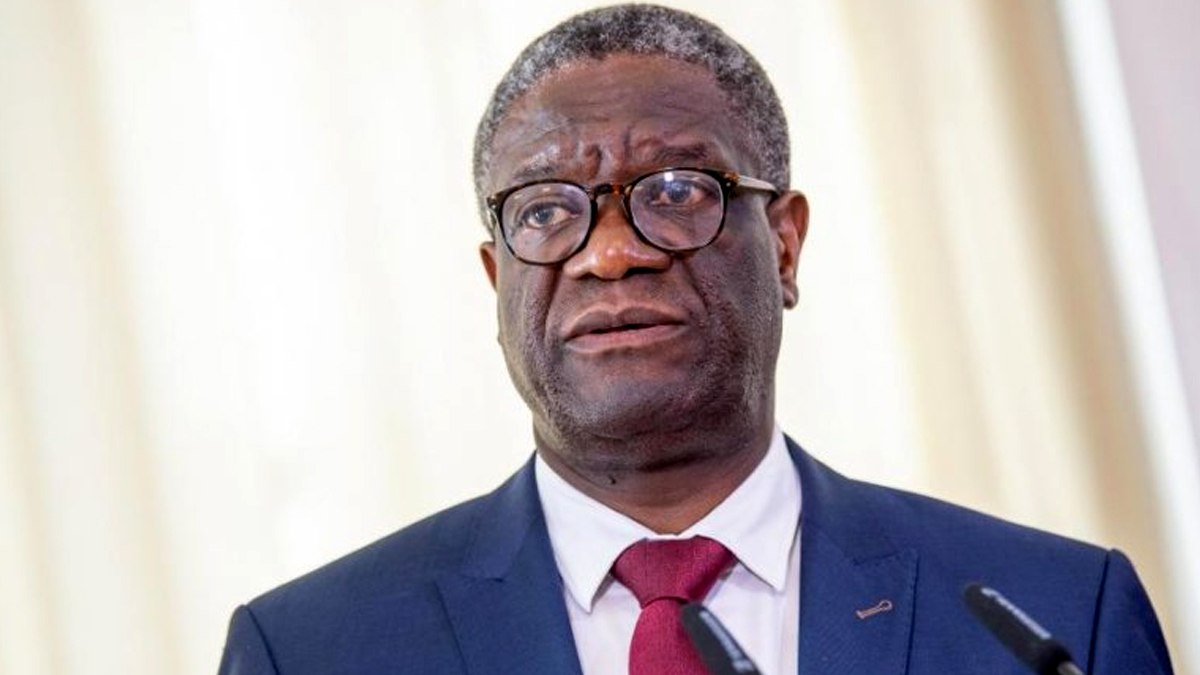
Yesterday, Denis Mukwege decided to lecture Congolese politicians about dignity, honour, and dying standing. Strong words. Very poetic. Very emotional. But also very convenient coming from a man with a fraudulent career.
Mukwege likes to speak as if he is the moral compass of Congo. But politics is not a Nobel Prize ceremony. Politics is the reality of power, interests, security, territory, and institutions. And on that terrain, Mukwege has little first hand experience.
It is also very interesting to see Mukwege criticizing the increasingly dictatorial tendencies of Tshisekedi, especially the attempts to change the constitution while the country is at war.
Where was Mukwege’s sudden love for democracy when he openly joined Tshisekedi’s camp? Where was this moral courage when he was busy attacking AFC/M23 and Rwanda, aligning himself with the same political system he now pretends to discover is authoritarian and incompetent? You cannot ride with a driver for years and then pretend you did not know he was drunk at the wheel.
The truth is simple. Mukwege, like Martin Fayulu, are failed politicians who survive politically not because of support inside Congo, but because they are useful pawns to foreign powers. They serve as permanent opposition figures who help maintain the image that Congo is a democracy with pluralism and debate, while in reality the same political class, backed by foreign interests, continues to preside over chaos, corruption, and the systematic looting of the country’s resources.
Tshisekedi may be incompetent, inconsistent, and dangerously obsessed with war rhetoric, but Mukwege and Fayulu represent another problem: politicians who live more in foreign capitals than among their own people, and who believe press conferences are a substitute for political organisation and popular support.
This is why the Congolese crisis is not just a Tshisekedi problem. It is a political class problem. A class of politicians disconnected from reality, dependent on foreign support, and incapable of building a functioning state. In such a situation, it is not surprising that armed movements start presenting themselves as liberation movements, because the state itself has failed to liberate its own people from poverty, insecurity, and corruption.
Congo is not suffering from lack of speeches. It is suffering from lack of leadership.