

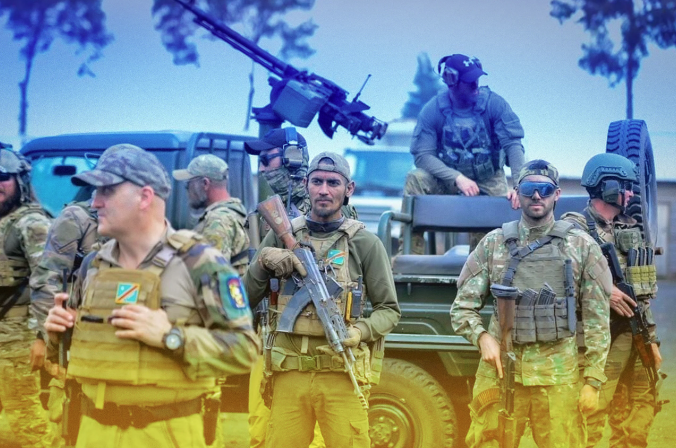
The growing involvement of foreign military contractors in the conflict in eastern Democratic Republic of Congo (DRC) raises serious questions about accountability, the protection of civilians, and the international community’s selective attention to human suffering. While the deaths of foreign personnel supporting Kinshasa’s military operations are increasingly attracting international media coverage, the suffering of Congolese Tutsi and Banyamulenge civilians continues to demand greater recognition and urgent action.
The world maintained a deafening silence as Tshisekedi recruited and deployed foreign mercenaries to fight alongside his genocidal forces of FDLR, Wazalendo, Burundian troops, and SADC forces against the AFC/M23 forces. The genocidal coalition forces perpetrated heinous crimes against humanity including the massacres of Congolese Tutsi civilians.
The same international community remains largely silent and takes no concrete action against Tshisekedi’s continued blatant violation of internal laws and the International Convention against the recruitment, use, financing and training of mercenaries adopted by the United Nations General Assembly on 4 December 1989 under Resolution 44/34, which entered into force on 20 October 2001.
As part of AFC/M23’s political goodwill to embrace collaboration toward the peaceful resolution of the conflict, the previous Romanian mercenaries who were captured from the battlefield were released and sent back to their home countries without being killed.
However, the Congolese ruler never learnt. This could have served as a message to Tshisekedi and the international community, but it has gone unheeded.
Tshisekedi subsequently turned to more foreign mercenaries, the Blackwater of American businessman Erik Prince’s private security network. Some officials within his regime welcomed their involvement. A few months later those mercenaries were involved in drone and artillery strikes in densely populated areas of eastern DRC, particularly around Minembwe, resulting in the deaths of numerous Banyamulenge civilians.
For more than a year, Banyamulenge church leaders and community organizations have raised alarms about alleged bombardments affecting civilians and essential infrastructure, including churches, schools, and hospitals in and around Minembwe, but the international community still turned a blind eye.
Now, following reports that more than 20 of these mercenaries have been killed while supporting operations against AFC/M23, Western media outlets have begun highlighting their deaths as if they were legitimate state armed forces.
The central issue is not whether mercenaries deserve attention when they die, but why the suffering of local communities so often struggles to command equivalent urgency. Congolese Tutsi and Banyamulenge civilians are entitled to the same dignity, protection, and international solidarity afforded to people elsewhere. Their deaths should not become secondary stories simply because they are less politically convenient.
Some coverage describes them as legitimate forces rather than clearly distinguishing their status as foreign military contractors or mercenaries. This raises a fundamental question: Why does international attention appear to intensify when foreign personnel are killed, while the suffering of Congolese Tutsi and Banyamulenge civilians receives comparatively less attention? These are Mercenaries hired to kill, and their actions are not accounted for. They don’t follow any rules of engagement because they are unlawful combatants. They are war criminals
Ultimately, foreign contractors cannot deliver a sustainable peace where political grievances, armed-group activity, impunity, and civilian insecurity remain unresolved. Paying foreign personnel to strengthen military operations may intensify the fighting without addressing its underlying causes. No amount of money can substitute for political responsibility, credible peace commitments, and the protection of every Congolese community.
The DRC government is spending billions of US dollars, which should be used to build a capable, sovereign military and protect citizens; contracting foreign mercenaries to come and kill innocent civilians is the worst miscalculation of the Tshisekedi’s side.
Kinshasa must be held accountable for its obligations to protect civilians and implement its commitments under the signed peace processes. The international community, meanwhile, must apply consistent standards to all parties and investigate credible allegations impartially.