

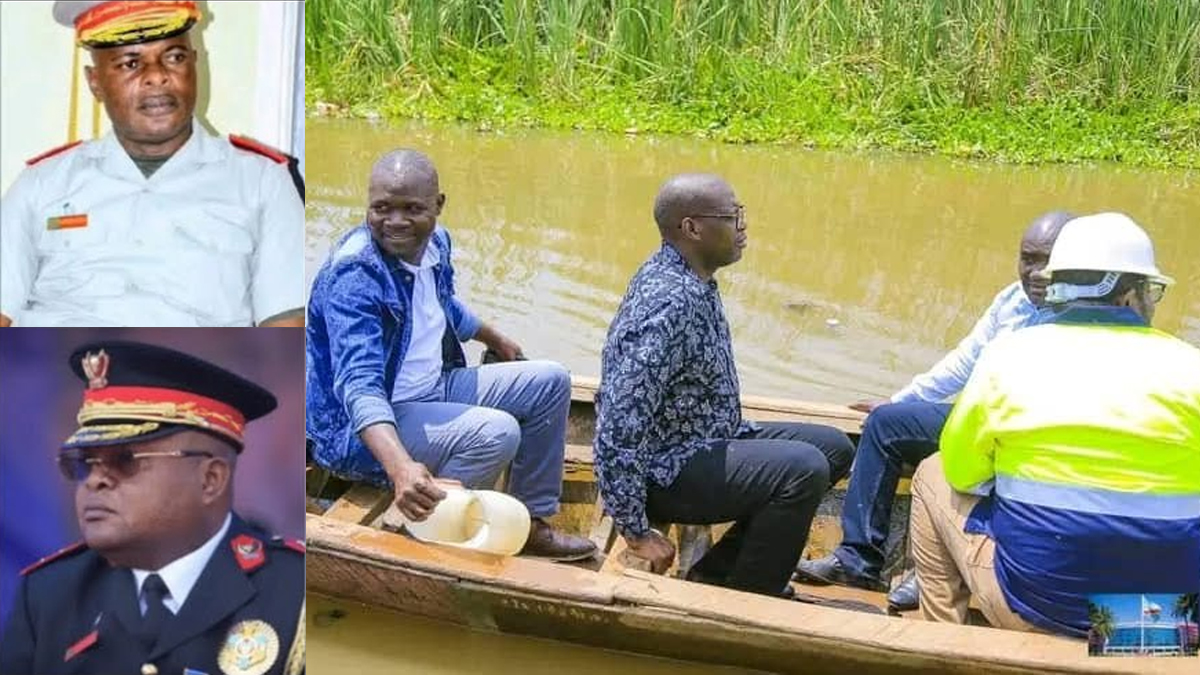
The DRC is witnessing a political earthquake as Tshisekedi’s regime is gripped by fear and turmoil. In a dramatic escalation, high-ranking military officials are being arrested, purged, and jailed, while provincial governors fleebthe country, fearing for their lives.
On 10 this month, criminal Tshisekedi ordered the arrest of several high-ranking military officers over allegations of plotting a coup. Among those detained: Lieutenant General Christian Tshiwewe, Former Army Chief and now a defense advisor to Tshisekedi, previously after the arrest of Lieutenant General Philemon Yav and Major General Albert Mwenda Nyembo
The purge didn’t end there
Just days later, Lieutenant-General Franck Buamunda Ntumba, head of Tshisekedi’s Military Household, was arrested and interrogated by the National Security Council (CNS). Ntumba is accused of links to the alleged conspiracy and is reportedly close to Tshiwewe, who remains in detention.
Reports suggest that 70% of those arrested are Swahili-speaking officers, accused without solid evidence of ties to former President Joseph Kabila, but many Congolese call this a politically motivated crackdown, raising questions about fairness and unity within the army.
The panic isn’t confined to the military; it’s now spreading through the political class. Provincial governors are leaving the country, fearing to be killed. Recently, Jacques Kyabula, Governor of Haut-Katanga, fled after being summoned to Kinshasa; his alleged offense was stating that Joseph Kabila and Corneille Nanga are Congolese citizens.
Yesterday, the Governor of Tanganyika Province also fled, fearing for his life after receiving threats from the regime.
These departures point to a deepening trust crisis between Tshisekedi’s administration and key regional leaders.
The arrests have crippled the military’s leadership structure. With over 20 generals and hundreds of colonels behind bars, many wonder: How can the army defend the nation under these circumstances?
Many Congolese warn that Tshisekedi’s strategy of arresting officers based on ethnicity or perceived loyalties could backfire, creating divisions within the armed forces and fueling instability.
By targeting Swahiliphones and now even members from his own Kasai region, he risks alienating vital allies. The DRC stands at a crossroads. Will this purge secure Tshisekedi’s power or accelerate the regime’s collapse? Definitely, his end is near.