

Where is the infamous International Contact Group now? Its silence is no longer neutral, it risks endorsing the very speeches it should be working to defuse.
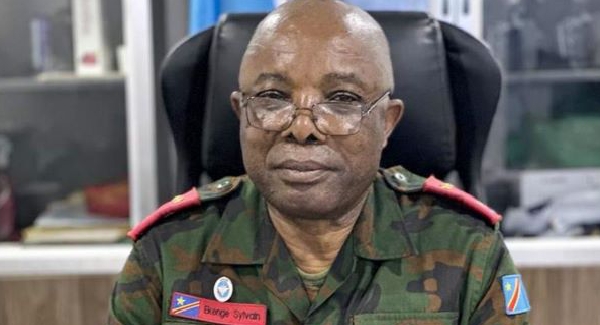
Following the incendiary public statement by Congolese Army Spokesperson Gen. Sylvain Ekenge, who warned Congolese citizens not to marry Tutsi women, a state message of discrimination was broadcast nationwide. Such rhetoric should have triggered immediate and unequivocal condemnation from the International Community. Instead, what followed was a disturbing silence especially from the so-called International Contact Group.
This is the same group of Western diplomatic missions in the DRC that has been quick to issue statements condemning AFC/M23 and Rwanda. Yet when faced with open ethnic incitement targeting Congolese Tutsis, the group has chosen to look away.
The International Contact Group for the Great Lakes (ICG) is a self-appointed, ad-hoc diplomatic body composed of senior officials and special envoys from the United States, United Kingdom, France, Germany (which chaired the group in early 2025), the European Union, Belgium, the Netherlands, Sweden, Switzerland, and Denmark, all accredited in the DRC.
Despite ICG’s stated commitment to peace, stability, and human rights, these actors have remained silent in the face of institutionalized anti-Tutsi discrimination under Tshisekedi’s regime.
Belgium has made a limited attempt to condemn Gen. Ekenge’s remarks. However, this response stands in sharp contrast to its prolonged silence as anti-Tutsi rhetoric has increasingly been normalized celebrated as an act of “patriotism” in today’s DRC. The rest of the Western powers have offered no response at all, even as hate speech escalates daily across the country.
National and international public opinion can no longer ignore the reality. Congolese Tutsis are being deliberately targeted by the Tshisekedi regime and elements within the FARDC. The question is no longer whether this is happening, but why those who claim to defend human rights refuse to speak out.
The deafening silence extends beyond diplomatic missions. Through its inaction, even the UN mission in Congo- MONUSCO gives the troubling impression that it is tolerating and endorsing rhetoric it is mandated to prevent.
The silence of the United States is particularly alarming. As a mediator of the Washington peace agreement between Rwanda and the DRC, the U.S. played a central role in crafting provisions requiring both parties to cease hostilities and end the incitement of hate speech. Yet today, genocidal incitement is not only occurring it is being broadcast nationwide, repeatedly and openly. Hate speech has been banalized, normalized, and weaponized. Meanwhile, lynching mobs operate in an environment shaped by impunity and international indifference.
If the International Contact Group, MONUSCO, and major Western powers continue to remain silent, they risk being remembered not as defenders of peace, but as passive witnesses to its erosion.
The question remains, how much more incitement, and how much more violence, must occur before silence becomes impossible to justify