

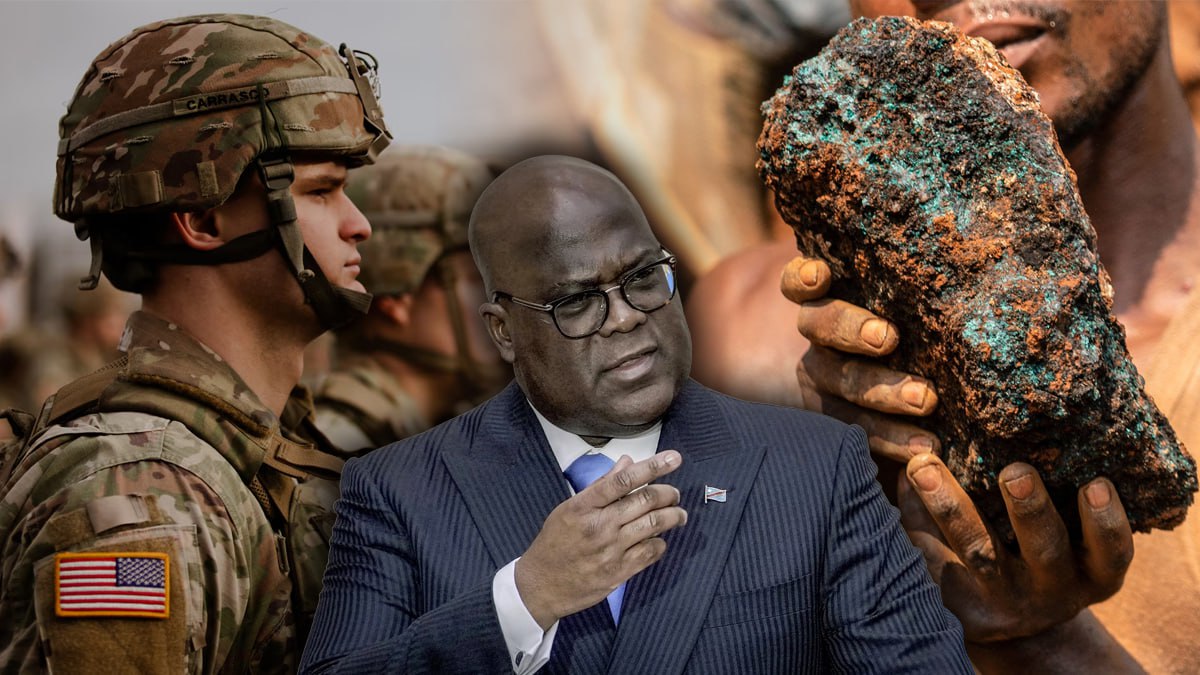
Congolese despot Félix Tshisekedi’s recent offer to the US (handing over mining rights in areas under AFC/M23 control in hopes of securing support against the revolutionary movement) is both naïve and dangerously delusional.
At first glance, it might look like a clever attempt to secure powerful backing. In reality, it dramatically misreads the risks of inviting a foreign superpower into the Congo’s messy, chaotic domestic politics.
As Corneille Nangaa pointed out on CNN, “Tshisekedi doesn’t have any mines to offer; he is a crook!”
The most obvious danger to the shortsighted Tshilombo? By dangling mineral rights, Tshisekedi could inadvertently empower the US to negotiate directly with the AFC/M23. After all, why would Washington risk troops fighting for something it has already “bought”, and which the AFC/M23 would welcome as a windfall “investment”?
Once mining rights are on the table, the revolutionaries suddenly hold the leverage, and the Americans might prioritize smooth, secure resource access over Tshisekedi’s shortsighted military goals. American companies already see AFC/M23 as a far more reliable security partner than the Kinshasa regime, riddled with incompetence moreover.
In other words, Tshisekedi could be incentivizing exactly what he fears most: AFC/M23 entrenchment in the Kivus, whether through integration into the security apparatus or as part of a negotiated federalist solution under a US-backed peace plan to finally end the conflict.
Meanwhile, handing over minerals to Americans does nothing to address the real problem.
AFC/M23 did not emerge from a vacuum. They are the byproduct of Kinshasa’s hate politics and genocide ideology, and the resulting political marginalization, weak governance, and deep local grievances. Foreign troops cannot fix that, and in fact, risk inflaming anti-foreign sentiment.
Washington knows this, which makes Tshisekedi’s hope for intervention all the more quixotic.
Diplomatically, the move is equally perilous. Regional actors and international partners will see it as a desperate, transactional gamble that further undermines Tshisekedi’s credibility, or whatever is left of it.
Domestically, trading national wealth for foreign boots on the ground invites backlash from radical nationalists and erodes political support.
In short, Tshisekedi treats Congo’s natural wealth like poker chips while the stakes are the country’s future. Lasting peace requires negotiation, domestic reform, and regional cooperation, not a high-stakes resource trade aimed at destroying AFC/M23 and erasing the legitimate grievances of millions of Congolese.
Tshisekedi, in his own way, keeps proving the cynics right: a sellout who will risk anything to cling to power.
He may hope for a powerful “ally”, but in the end AFC/M23 will have the last laugh.