

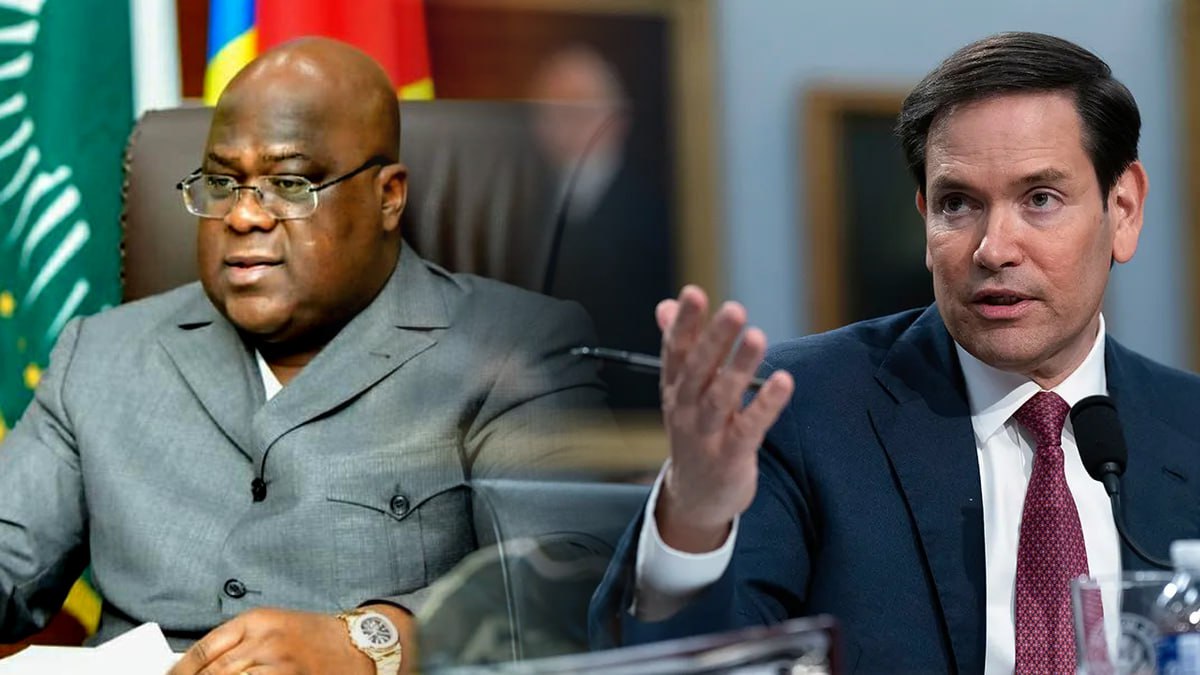
For Washington, the AFC/M23 question is, by all indications, a settled matter awaiting Kinshasa to stop running in circles and return to reason. Indeed, the outstanding variable is whether Kinshasa is prepared to align with a framework that U.S. policymakers already consider defined.
That posture was made clear at an event hosted by the Corporate Council on Africa (CCA), a body focused squarely on trade and investment between the United States and the continent.
Speaking there, Nick Checker, a senior official at the Bureau of African Affairs, outlined Washington’s forward-looking vision:
“We are considering a cross-border project, perhaps the regional economic integration framework between the DRC and Rwanda, but one that will constitute a first strategically important project. If it is successful, we will be able to extend this model across the entire continent.”
The setting was revealing. This was not a security conference, but a business platform. The implication is hard to miss: the US believes security issues have found their cure.
The dispute between Rwanda and the DRC has been addressed on paper and now awaits execution. The priority is to move from FDLR neutralisation to commerce.
As for the Doha process, the framework exists; only four protocols remain to be negotiated, as Massad Boulos, Trump’s senior advisor on African affairs, indicated in the past.
On AFC/M23 specifically, American lawmakers have signaled similar views. Representative Ronny Jackson has openly advocated integrating the revolutionaries into the Congolese security apparatus. Representative Chris Smith implicitly acknowledged a functional reality when he urged FARDC to eliminate the FDLR in areas it controls and called on M23 to do the same in its zones. That framing treats M23 not as an anomaly to be erased, but as an actor to be incorporated within a security restructuring.
For U.S. decision-makers, the essentials are straightforward: ceasefire first, neutralization of the FDLR, integration mechanisms negotiated domestically, and a pivot toward regional economic integration.
The debate over what integration looks like — merged units or a freezing of front lines and territorial control pending a national dialogue — is, in Washington’s view, a Congolese discussion.
The strategic direction, however, is already chosen: stabilize, integrate, and let business begin.