

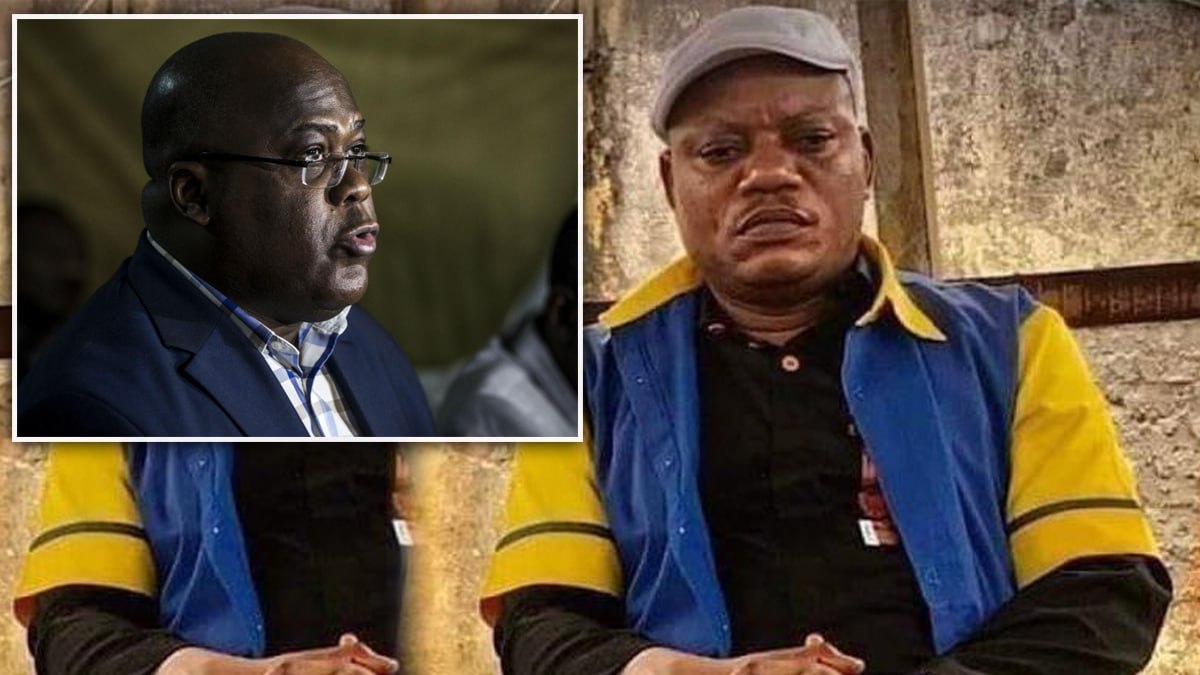
Jean-Marc Kabund, former deputy president of Tshisekedi’s ruling party, the Union for Democracy and Social Progress (UDPS), appeared on France 24 and blasted his former boss (Félix Tshisekedi).
Kabund said Tshisekedi uses the insecurity in Eastern DRC as a shield for incompetence and malgovernance. That the endless crisis has become a political cover, a ready excuse and a permanent justification.
It is important to remember that Kabund is not just some random critic.
In 2022, he fell out with Tshisekedi after years at the heart of the ruling party. Soon after, he was arrested and later imprisoned. He remained behind bars until 2025. Upon his release, he formed his own political party and formally joined the opposition.
For sometimes Kabund has seen the inner workings. He defended them once. He understands how narratives are shaped and how crises are framed. When such a figure claims that insecurity is being politically instrumentalized, it cannot be brushed aside as ordinary opposition noise.
Eastern Congo’s tragedy is very real. The violence, the displacement, the fear are not inventions. Yet in Kinshasa, every surge of instability conveniently shifts national focus. Economic hardship fades from debate. Governance failures receive less scrutiny. Public anger is redirected outward.
For some Congolese, this pattern is becoming clearer. For others, still overwhelmed by constant alarm and emotional rhetoric, Kabund’s remarks may feel like a first crack in the official storyline, but it is just the beginning.
Kabund chose an international platform. He spoke calmly, directly, without hesitation. That signals calculation. It signals confidence that he is no longer isolated.
It also hints at deeper fractures. Regimes often survive on loyalty built through proximity and privilege. But loyalty tested by exclusion can quickly turn into dissent. When former insiders begin to question the leadership openly, it suggests that unity within the ruling camp is thinner than advertised.
Kabund may be dismissed as bitter. He may be portrayed as ambitious. But his intervention exposes a vulnerability: the narrative of constant external blame is no longer fully contained.
If internal discontent continues to grow, he will not be alone tomorrow. And when criticism moves from the streets to former corridors of power, the political climate quietly shifts.