

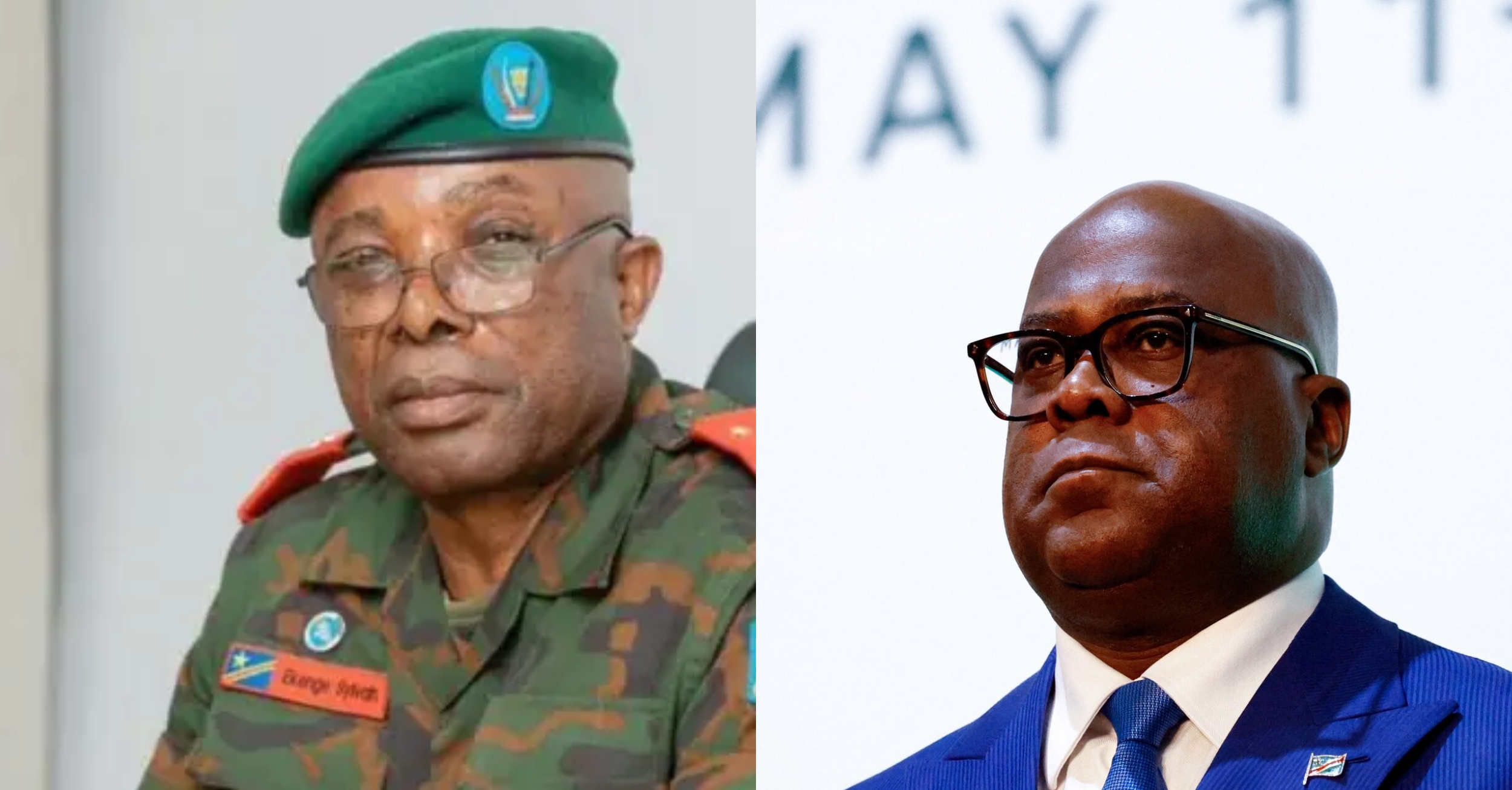
On December 27, 2025, FARDC’s spokesperson, Gen. Ekenge appeared on the national broadcaster RTNC and made remarks targeting Tutsi women. He warned Congolese men to be cautious about marrying Tutsi women, branding them as inherently deceitful beings.
His hate speech provoked a national and international backlash that the regime had to manage. Ekenge was subsequently suspended.
This was a senior military official speaking on state television. When ethnic stereotypes are articulated by a state representative through a national broadcaster, they carry institutional weight. When the spokesperson of an army committing war crimes against Tutsi communities makes such remarks, that rhetoric is a call to kill.
Yet, almost nine months later, Ekenge has returned to the same position. On September 25, 2026, an official FARDC communiqué announcing the deaths of two senior military justice officials in an aircraft crash at Kenge was signed by Ekenge, once again identifying him as the army’s spokesperson. Several Congolese media outlets have reported this as his return to the position, although no separate public announcement lifting his suspension has been identified.
This raises a fundamental question: what accountability followed the December 2025 hate speech? If the remarks were serious enough to warrant suspension, what investigation was conducted? What legal process followed? Why was the same official considered suitable to resume speaking on behalf of the national army?
The issue is larger than Ekenge himself. A temporary suspension followed by reinstatement without transparent explanation sends the message that hate speech against Tutsi is acceptable. Clearly, had it not been for international backlash, the regime would not have even bothered suspending Ekenge.
The Tshisekedi regime has repeatedly presented itself as a government committed to defending national unity and combating discrimination. Those commitments should be measured not only by official statements but also by how institutions respond when senior officials cross the line.
Hate speech cannot be condemned when the cameras are watching and forgotten when the headlines disappear.
Reinstating Ekenge is a choice. It is a choice to normalize hate speech at the highest level of the state. It is a choice to declare that military discipline ends where politics begins.