

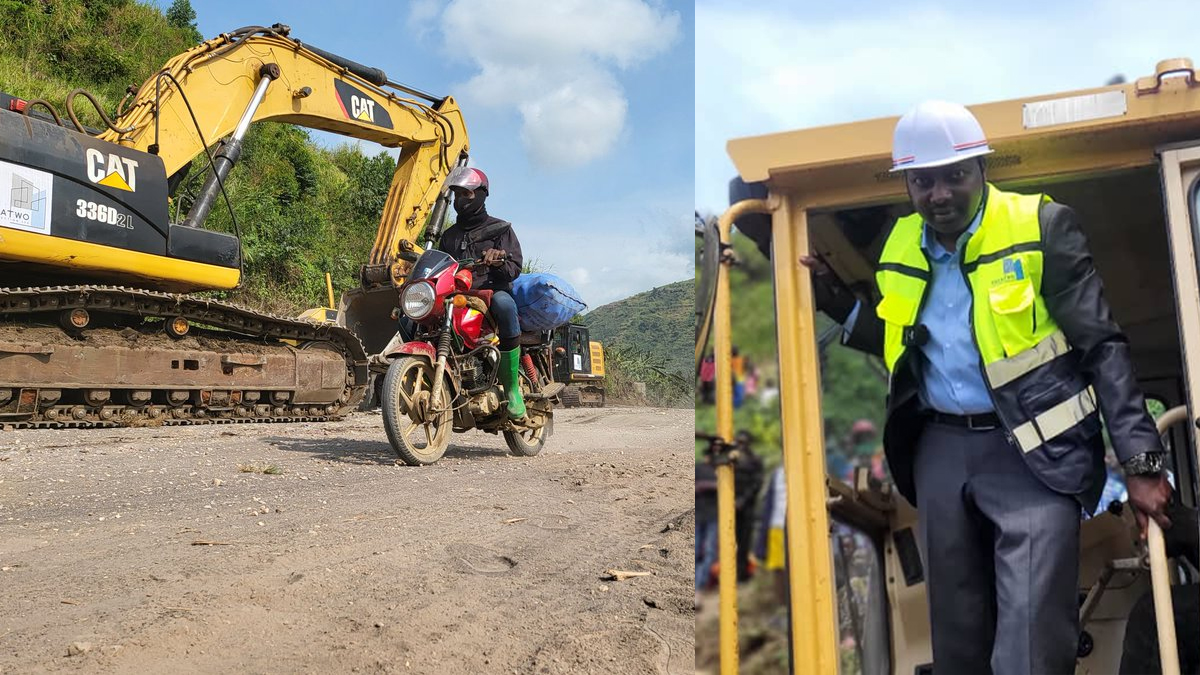
Since liberating Goma and Bukavu, the M23 movement has taken a new direction: one focused on rebuilding and transforming lives.
This shift has shown many people in Eastern DRC that M23 may be more about action than alleged “terrorists” as they are often smeared by Kinshasa regime.
One of the biggest changes is the launch of road construction projects connecting isolated parts of the region. Roads like Sake–Masisi–Walikale and Kibumba–Mwaro, which were previously in terrible condition or completely unusable, are now being rebuilt.
These roads when finished they will open up remote villages and giving people access to markets, hospitals, and schools and local communities have not just welcomed the work—they’ve joined in, volunteering labor without expecting payment.
In Goma, water and electricity systems that had failed for years are being restored. These were basic services the people had begged Kinshasa to fix for decades. Now, under M23 control, some of those promises are finally becoming reality—and at a relatively little budget.
It is important to remind that the money being used is 100 times lesser than budgets previously dedicated to these areas by Tshisekedi regime, and which ended in people’s pockets.
These developments are not only helping communities survive—they are giving hope. New roads and better services create space for more investment and business. They bring the possibility of peace because people see their lives improving and their dignity restored.
At the same time, the work on the ground challenges Kinshasa’s portrayal of M23 as just a terrorist group. Many in Eastern Congo now see them differently—not because of speeches, but because of the results they can see and touch.
These are not just road projects. They are signs of a bigger shift. M23 is presenting itself as the start of a new era—one where every village is reached, every voice is heard, and every citizen is valued. For many, this is the kind of leadership they have long waited for.