

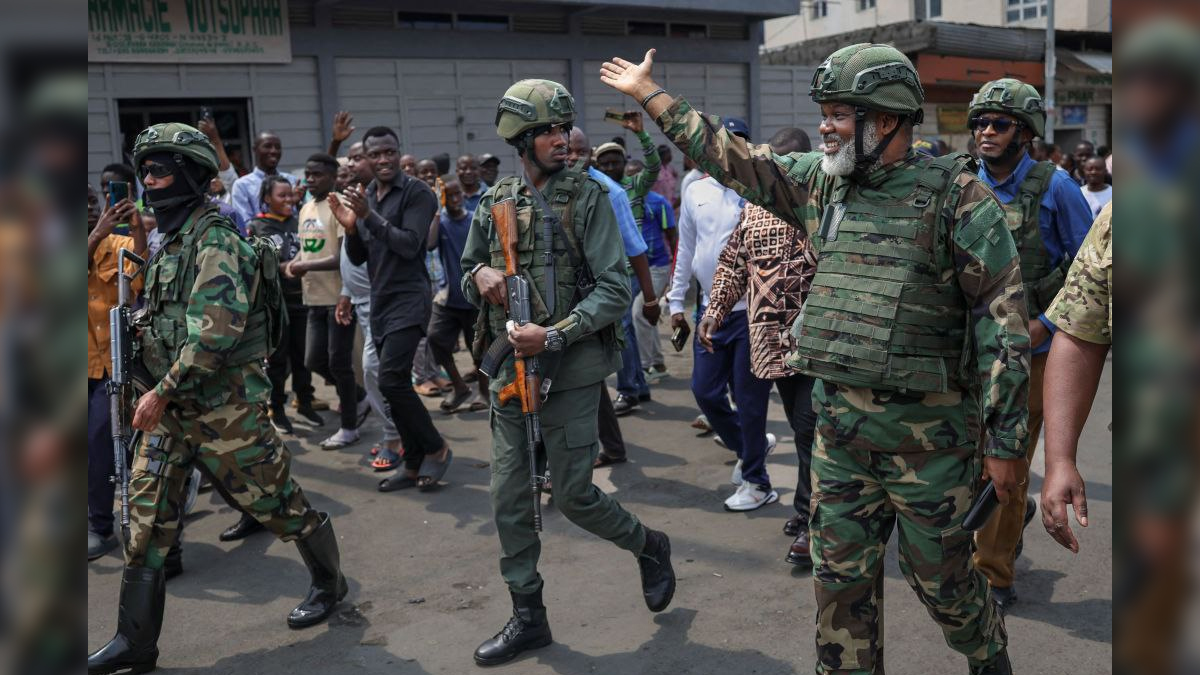
In just 110 days since liberating Goma, the M23/AFC movement has made significant strides in stabilizing and securing a region long ravaged by conflict.
At the end of January, M23/AFC, a movement committed itself to defending the Tutsi community in the Democratic Republic of Congo from ongoing pogroms and ethnic cleansing orchestrated by the Kinshasa regime, liberated Goma, the capital of North Kivu Province. This marked a pivotal moment.
In the early days of the city’s liberation, M23 eliminated General Peter Cirimwami, then military governor of North Kivu. Cirimwami had been a key conduit between the Tshisekedi regime and the FDLR, a genocidal group implicated in the 1994 Genocide against the Tutsi. He held several clandestine meetings with FDLR leaders, during which he shared operational intelligence aimed at dismantling the M23 movement.
M23 went further to neutralize FDLR elements operating in the area. Captured fighters, including Brigadier General Gakwerere Ezechiel, a prominent figure in the 1994 genocide, were handed over to Rwanda.
But the movement’s vision doesn’t stop there. M23 has begun rebuilding the region, launching infrastructure projects aimed at reconnecting communities and restoring dignity to everyday life. Critical roads like Sake–Masisi–Walikale and Kibumba–Mwaro, once impassable or in complete disrepair, are now being reconstructed.
What’s more impressive is that all of this has been accomplished on a minimal budget and in a remarkably short span of time. This stands in contrast to MONUSCO which, despite its multi-billion-dollar budget and decades-long presence, has failed to deliver even a fraction of the impact M23 has achieved in just months.
In Goma and beyond, a new chapter is being written. One of resilience, accountability, and reconstruction. And so far, M23 is proving that even in a resource-constrained environment, decisive leadership and a clear vision can bring real change.