

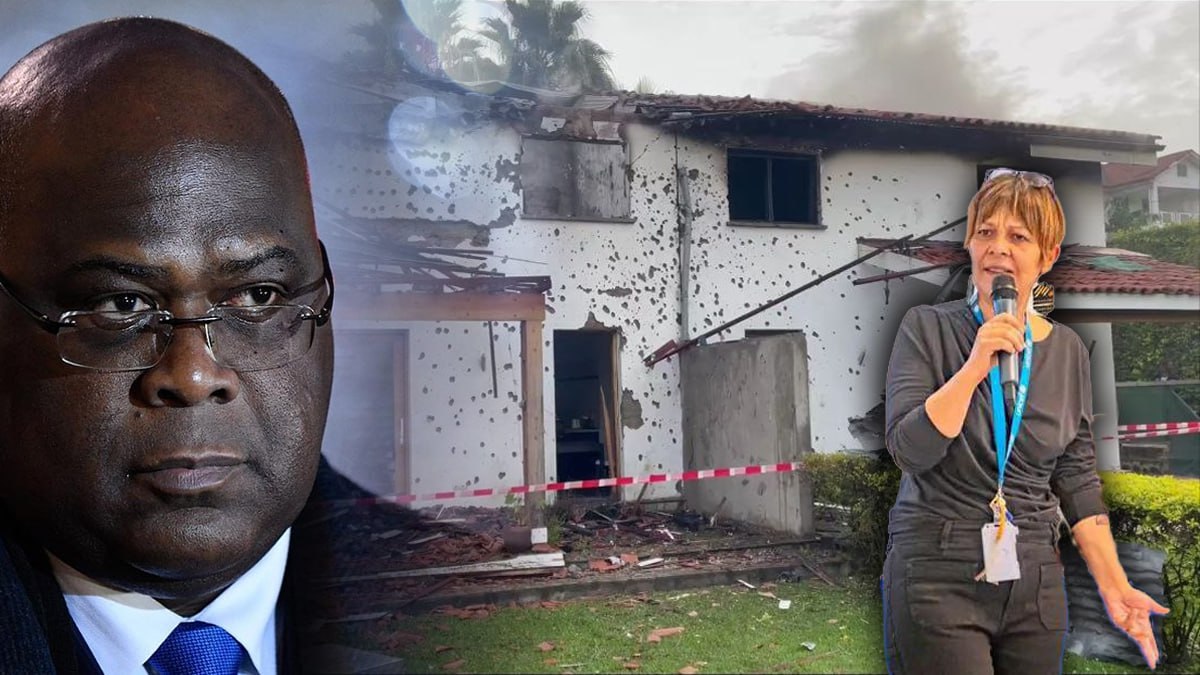
On the night of Tuesday, in Goma at around 4 am, Kinshasa regime dropped a bomb on the house of Karine Buisset, killing her instantly along with two members of her household.
Buisset was a UNICEF coordinator in the area, responsible for the repatriation of Congolese refugees. Her death immediately became a point of contention.
Kinshasa rushed to deny responsibility. The international community rushed to issue statements and those statements were astoundingly empty and controversial.
For the west, accusing the regime of Kinshasa would mean confronting their own puppet. But blaming M23 was equally difficult. The drone strike happened in an area under M23 control. It would take an extraordinary level of imagination to believe a movement bombed a house inside its own zone.
So the result was the usual diplomatic acrobatics. Concern. Regret. Calls for investigation. But no clear finger pointed to the real culprit where it obviously should.
This is precisely why M23 should not waste a single minute waiting for condemnation from Western capitals. Those governments rarely sacrifice interests for moral outrage. Especially when the actor in question is the regime of Félix Tshisekedi, a government that functions less as an independent power and more as a convenient instrument.
Kinshasa today plays a familiar role in the great geopolitical theatre of Central Africa. It is the gatekeeper of one of the world’s richest mineral vaults. Cobalt, coltan, copper and gold do not simply sit in Congolese soil. They feed the industrial appetites of the very capitals now issuing those empty statements.
In that equation, Kinshasa is not a strategic partner. It is a pawn. A useful pawn when access to resources must be preserved. A disposable pawn when the narrative requires it.
The uncomfortable truth therefore remains simple. The future of Congo will not be decided in Paris, Brussels, Washington, Berlin, or Beijing. It will be decided by Congolese themselves.
Waiting for moral clarity from foreign governments is a losing strategy. Those capitals will continue to talk about democracy, human rights and accountability while quietly ensuring that the mineral pipelines remain undisturbed.
Until the balance of power changes on the ground, the same governments will continue shielding Tshisekedi’s regime, no matter the accusations of corruption, authoritarian drift, or reckless military conduct.
The drone strike in Goma killed three people, but it also exposed something else. In Congo’s tragic political theatre, outrage has a hierarchy and mineral interests still rank higher than human lives.