

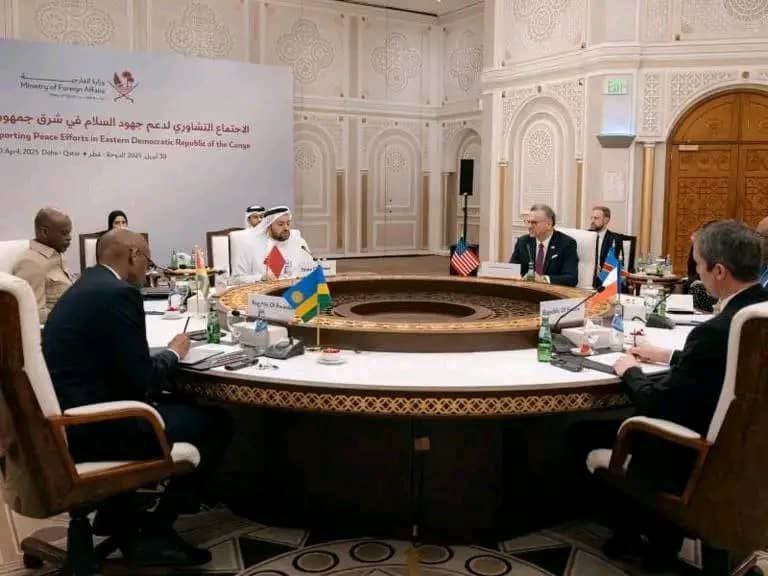
The ongoing peace talks between the M23 and the Congolese expose only bad faith motives by Kinshasa. While discussions have been taking place behind closed doors and are expected to conclude today, Congolese officials and their media allies have gone into overdrive, twisting facts and misrepresenting the dialogue.
Even before Doha process commences, M23 had tabled its demands clearly. These include ending hate speech, halting the spread of genocide ideology, stopping the fueling of anti-Tutsi sentiments, dismantling the FDLR, and creating a genuine channel to address their grievances. These are not outlandish demands. They are rooted in human dignity, safety, and a desire for sustainable peace in the eastern region. Yet somehow, Congolese propaganda has managed to spin even this into a tale of secession and power grabs.
Claims that the M23 is demanding federalism or exclusive control over liberated territories for eight years are pure fabrication. No such points have ever been raised in the Doha sessions. The likes of Patrick Muyaya and his media echo chamber are simply flooding the public space with noise, hoping to drown out the substance of the talks. Their aim is not peace, but manipulation of public conscience in Congo.
This behavior is not new. The Congolese government has consistently approached the peace process in bad faith. They attempted to derail the Washington-brokered deal, only to be reminded that what is at stake are not diplomatic trophies but human lives. And still, instead of learning from that embarrassment, they have chosen to double down on lies, deflection, and confusion.
If this posture continues, it will not be the M23 that loses. In fact, the rebel movement has shown again and again that it can make significant military advances while the Congolese government cries wolf. You cannot negotiate peace while fueling hate, nor can you claim to want stability while undermining every path that leads to it. The duplicity is staggering.
At this rate, Kinshasa risks losing both moral ground and military leverage. M23 may not have too much of international recognition, but they have strategic discipline, political clarity, and a defined message. What does the Congolese government have? A tired propaganda machine, some vague regional support, and a population increasingly tired of empty speeches.
The path to peace is narrow, but not impossible. It requires honesty, courage, and a willingness to deal with root causes, not fantasies. If the Congolese leadership cannot even admit that hate speech and ethnic targeting are real, then they are not ready for any meaningful reconciliation. Twisting peace into chaos may serve short-term interests, but it guarantees long-term failure.
As the Doha talks close today, what remains is a bitter aftertaste of bad-faith diplomacy from Kinshasa. Instead of building on a rare window for dialogue, the Congolese leadership chose distraction and distortion. Sad!